
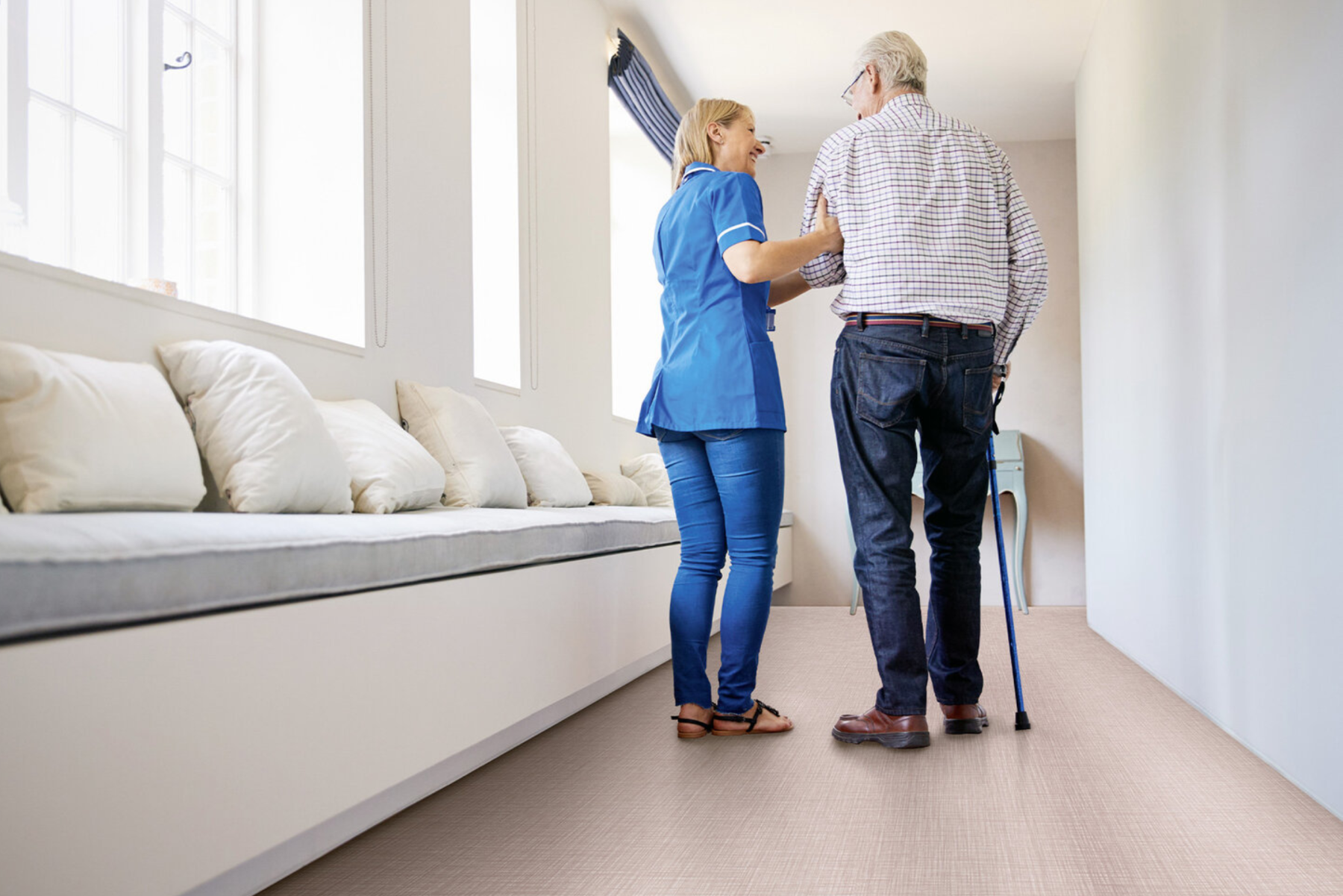
As the number of people living with dementia continues to rise, creating safe, comfortable and inclusive healthcare environments is increasingly important. Flooring, colour, lighting and layout all influence how individuals navigate spaces, making thoughtful design essential for supporting independence, reducing anxiety and improving wellbeing.
Flooring plays a particularly important role in dementia-friendly design. Highly polished surfaces can appear wet or slippery, while busy patterns may be mistaken for obstacles or changes in floor level. Selecting appropriate finishes, colours and textures helps create calmer environments that are easier to navigate.
Colour contrast is another key consideration. Clear distinctions between floors, walls, doors and other features can improve spatial awareness and help individuals identify boundaries more confidently. Light Reflectance Values (LRVs) provide an important measurement tool, enabling designers to achieve suitable contrasts between different surfaces.
Research from organisations including the Dementia Services Development Centre (DSDC) at the University of Stirling highlights the importance of evidence-based design principles in creating supportive environments for people living with dementia.
Gerflor and Gradus offer a range of flooring and wall protection solutions designed to support these requirements. Gerflor collections including Mipolam Symbioz and Taralay Premium have achieved DSDC accreditation, while comprehensive LRV information across Gerflor flooring, Gradus wall protection and stair nosings helps specifiers develop coordinated, inclusive interior schemes.
By combining appropriate flooring finishes with considered colour selection and visual clarity, healthcare providers can create environments that encourage independence, reduce confusion and support the delivery of care.
Ultimately, dementia-friendly design is about more than meeting functional requirements. It is about creating safer, more welcoming spaces that promote dignity, comfort and quality of life for patients, while supporting staff and visitors throughout the healthcare environment.
To read the full press release, please click here.